Showing posts with label Cosmos. Show all posts

Friday, May 9, 2025

Newton, Teleology and the Mars Hill Encounter

Newton's eminence is made plain by Isaac Asimov: "most historians of science would declare that Isaac Newton was the greatest scientific mind the world has ever seen."[1]  Sir Isaac Newton (1642-1727) was born at Woolsthorpe in Lincolnshire EngIand.  He taught college, invented the reflecting telescope, discovered Calculus, prosecuted a counterfeiter, and was president of the Royal Society for 24 years.


In the Principia, based on Democritus' atoms, Newton stated the law of gravitation: "Every particle in the universe attracts every other particle with a force that is directly proportional to the product of their masses and inversely proportional to the square of the distance between them."[2]  Mathematically, Newton gave proof of the order in the cosmos.  He believed that Pythagoras had already recognized this principle.[3]  Newton also described the laws of motion with such ideas as bodies at rest and uniform motion which can only be understood in relation to absolute space and time.


Not only was Newton a diligent scientist, he also wrote the equivalent of 30 books on theological matters. Referring to Daniel 12:14. he predicted that in the end times man would travel over 50 miles per hour.[4]  Voltaire later poked fun at this by declaring that any human would suffocate at 30 miles per hour.  Newton disbelieved in the transmigration or souls which Plato described. The doctrine of the Trinity was another view he refused to accept. Concerning the world-wide flood of Noah's generation, Newton along with Edmond Halley held to William Whiston's (Newton's assistant) explanation in which a heavenly body passed near the earth producing a tidal catastrophe.[5]  Of God's Word, Newton asserted, "We account the Scriptures of God to be the most sublime philosophy.  I find more sure marks of authority in the Bible than in any profane history whatever."[6]


Newton used order seen in the world to point to the Designer, Universal Ruler, Unmoved Mover, Conserver, Lawgiver and First Cause of the universe. Teleological arguments were previously used by Aristotle and Aquinas. One incident in Newton's life is a fine example:


One day, as Newton sat reading in his study with his [recently completed mechanical model of the universe] on a large table near him, his infidel fiend stepped in.  Scientist that he was, he recognized at a glance what was before him.  Stepping up to it he slowly turned the crank, and with undisguised  admiration watched the heavenly bodies all move in their relative speed in their orbits.  Standing off a few feet he exclaimed, "My!  What an exquisite thing this is!   Who made it?"  Without looking up from his book, Newton answered, "Nobody!"   Quickly turning to Newton, the infidel said, "Evidently you did not understand my  question.  I asked who made this?"  Looking up now, Newton solemnly assured him that nobody made it, but that the aggregation of matter so such admired had just happened to assume the form it was in.  But the astonished infidel replied with some heat, "You must think I am a fool!  Of course somebody made it, and he is a genius, and I'd like to know to know who he is."

Laying his book aside, Newton rose and laid a hand on his friend's shouIder  "This thing is but a puny imitation of a much grander system whose laws you know, and I am not able to convince you that this mere toy is without a designer and maker; yet you profess to believe that the great original from which the design is taken has come into being without either designer or maker! Now tell me by what sort of reasoning do you reach such an incongruous conclusion?[7]


By presenting the message of creation to the skeptical mind, Newton takes after the Apostle Paul's action on Mar's Hill (Acts 17:18-24).  Paul confronted the atheistic Epicureans and the pantheistic Stoics in addition to the Areopagus with the proclamation that, "The God who made the world and everything in it is the Lord of heaven and earth..." (Acts 17:24).  Likewise, in the first chapter of Romans, Paul announces,


For since the beginning of the world the invisible attributes of God, e.g. his eternal power and divinity, have been plainly discernible through things which he has made and which are commonly seen and known, thus leaving these men without a rag of excuse. (Rom. 1:20, JB Phillips)


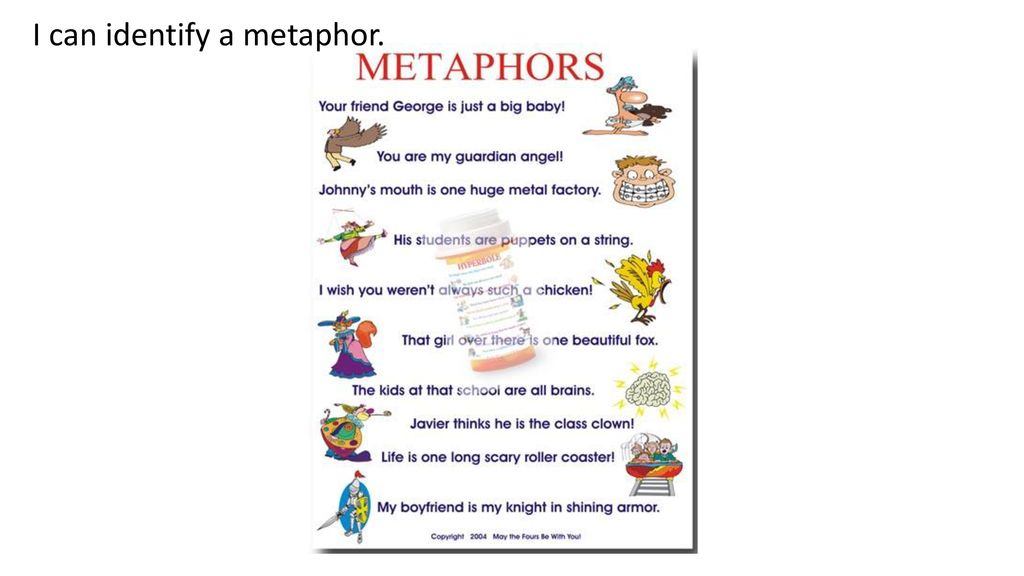
Is there truly a metaphorical relationship between man-made items and the natural world which is "commonly seen and known?"  The use of metaphor, first  described in Aristotle's Poetics is the source of virtually all our knowledge.  As C.S. Lewis contends "If there is not, in fact, a kind of psycho-physical parallelism (or more) in the universe - then all our thinking is nonsensical.[8]  Despite Hume's rejection of the metaphorical challenge from design, the Bible itself seems to use such reasoning: "Every house, of course, is built by someone - and God is the one who has built all things" (Heb. 3:4, TEV).  In the judgment of Albrecht and Alexander,


Men cannot but stand in awe of what they find in nature, from the celestial universe to the heart of the atom. In the apparent absence of God, those who have refused him have no choice but to attribute the eternity, power, and deity which is visible in the world to the creation itself.  Thus arises pantheism [as with the Stoics] and ultimately monism - the most consistent and systematic attempt to explain the supernatural qualities of the universe apart from its transcendent, personal Creator.  Sin and spiritual pride sever our experiential contact with God; this simple yet devastating fact sets in motion a progressive narrowing of philosophical options which virtually preordains the world view that we see emerging...  If the search for an ultimate starts with just the data of consciousness. it will by definition end with a rearrangement and reinterpretation of that same data; the conclusion is bound (literally) to be that the fundamental principle of existence is consciousness itself.[9]


Scripture portrays this condition quite accurately: "They exchange the truth about God for a lie; they worship and serve what God has created [the Creation] 

instead of the Creator himself, who is to be praised forever! Amen" (Rom 1:25, TEV).  Surely Newton would agree,


** I originally wrote this paper in 1978 (as best as I can figure).

my site: https://totalyouth.us


Notes:

1) Jerry Bergman, "The Law of Cause: An Examination of the Need For Causal Factors, CRSQ, June 1978, p. 41.

2) Konrad Krauskopf, Fundamentals of Physical Science (New York, McGraw-Hill, 1959), p. 82.

3) Jacob Bronowski, The Ascent of Man (Boston: Little, Brown and Co., 1973), p. 243.

4) H.L. WIllmington, That Manuscript From Outer Space (Lynchburg, VA:  Thomas Road Bible Institute, 1974), pp. 124,125.

https://archive.org/details/thatmanuscriptfr0000will

5) Donald Patten, The Biblical Flood and the Ice Epoch (Seattle, WA: Pacific Meridian Pub., 1966), pp. 31,184.

https://www.creationism.org/patten/PattenBiblFlood/

6) Dale Crowley, The Bible Has the Answer (Wash., DC: National Bible Knowledge Assoc., 1948), p. 103.

7) "The Law of Cause and Cosmology" by Jerry Bergman, CEN Technical Journal, Vol. 8, #2 (1994), p. 240.

https://dl0.creation.com/articles/p028/c02812/j08_2_238-245.pdf

8) Kathy Hutson, "Metaphor: An Evidence From Design of the Creation Model" Creation Social Science and Humanities Quarterly, Fall 1978, p. 9.  

9) Mark Albrecht and Brooks Alexander, "The Sellout of Science," Spiritual Counterfeits Project Journal, Aug. 1978, p. 25, emphasis in the original.

https://arcapologetics.org/the-sellout-of-science/


And Now 4@ Word from the #LoyalOpposition ...

a song about #TELEOLOGY >>

https://youtu.be/V97CdwYztwE


** quote in top graphic is from Newton's Optics (Query 30, p. 374):

https://www.iliesi.cnr.it/iniziative/Letture/clericuzio_newton.pdf


** kudos for graphics:

https://yandex.com/images/search?text=Sir+Isaac+Newton+optics&pos=5&rpt=simage&img_url=https%3A%2F%2Fsun3-12.userapi.com%2F7ga3Vc9VWYzDFN1fIUkj-vlyQ1m6VV1XasKhDQ%2Fxu460K5sQNo.jpg&from=tabbar&lr=109918

https://www.enginediy.com/cdn/shop/products/8d816860-46f5-449a-b7a9-769feb98e5c8_223e8fe8-dd4d-42b7-9275-14c531399568_700x700.jpg?v=1663730586

https://slideplayer.com/slide/16253965/95/images/9/I+can+identify+a+metaphor..jpg

#Newton #Teleology #MarsHill #Areopagos #Hume #Worldview #Design #Cosmos #UNI #Universe #SolarSystem #skeptic #God #Bible #Jesus #gravity #gravitas #JN316 ╬ #LoveSong #Optics #Opticks #SMILE ! itza #metaphor ☺☺ #Im2Tired (like a bike) #Scripture #Creator #Principia #Democritus #Calculus #iπDU ? 

Wednesday, December 28, 2011

Behemoth & Leviathan

Was Behemoth an elephant or a hippo?  Was Leviathan a crocodile?  The Lord describes these creatures in Job 40 and 41.
The 1959 scifi movie The Giant Behemoth from the UK got it right – this creature was a dino!  The film can be seen here.  In the story, paleontologist Dr. Samson says, “I knew these creatures [dinos] were alive somewhere.”

The Apologetics Study Bible suggests that Behemoth may have been a buffalo, dino, rhino or hippo, but says that the hippo is the “most likely” identification. [1]  It even points out the tail being like a cedar!  This reference Bible favors the crocodile as being the Leviathan.
The NIV Study Bible claims that the description of Leviathan’s fire-breathing abilities (Job 41:18-21) is “highly figurative, exaggerated poetic imagery.” [2]  In contrast, we read this account from 1685 with the title A True Relation of the Dreadful Combat between More of More Hall and the Dragon of Wantley [3]:

The Treasury of Scripture Knowledge (TSK) says the following about the Behemoth:

Perhaps an extinct dinosaur, maybe a Diplodocus or Brachiosaurus, the exact meaning is unknown. Some translate as elephant or hippopotamus but from the description in Job 40:15-24, this is patently absurd.
Carl Sagan (d. 1996), host of the PBS Cosmos series, made this startling admission:

Is it possible that dragons [dinos] posed a problem for our protohuman ancestors of a few million years ago, and that the terror they evoked and the deaths they caused helped bring about the evolution of human intelligence? … Could there have been manlike creatures who actually encountered Tyrannosaurus rex?  Could there have been dinosaurs that escaped the extinctions in the late Cretaceous Period?  Could the pervasive dreams and common fears of “monsters,” … be evolutionary vestiges of quite adaptive baboon-like responses to dragons and owls? ... [4]

Sagan’s last interview may be found here.
Here are fascinating firsthand accounts of Mkele Mbembe (a small dino) from the History Channel.

There’s nothing on this earth quite like him [Leviathan], not an ounce of fear in that creature!  He surveys all the high and mighty - king of the ocean, king of the deep!  Job answered GOD:  I’m convinced:  You can do anything and everything. Nothing and no one can upset your plans (Job 41:33 – 42:2, Message).

Notes:
1)  The Apologetics Study Bible ed. by Ted Cabal (Holman, Nashville, TN, 2007), p. 781.
2)  The NIV Study Bible ed. by Kenneth Barker (Zonderven, Grand Rapids, MI, 1995), p. 770.
3)  British Dragons by Jacqueline Simpson (Wordsworth Editions, London, 2001, orig. pub. 1980), pp. 147, 150.
4)  The Dragons of Eden by Carl Sagan (Ballantine Books, NYC, 1977), pp. 150, 151.

Wednesday, July 16, 2008

Seven and the Weekness (can YOU feel it?)


  Carl Sagan quotes the following in “Cosmos,”
The universe seems… to have been determined and ordered in accordance with number, by the forethought and the mind of the creator of all things; for the pattern was fixed, like a preliminary sketch, by the domination of number preexistent in the mind of the world creating God.
Nicomachus of Gerasa
Arithmetic I, 6 (c. 100 A.D.)[1]
According to Sagan's story a message from the "intelligent designer" is hidden in the number pi (3.14159265358...).  Despite the hopeful promise of conversing with highly intelligent aliens, "Cosmos" leaves us with an EvoEmo attitude (see prior post).

  The number seven is often thought to be perfect or mystical. The reciprocal of seven leads to an ellipse. The five visible planets (Mars, Mercury, Jupiter, Venus and Saturn), which travel in an ellipse, plus the sun and moon are considered to be the ancient foundation for the days of the week. Is there a better explanation? Fred Schaaf observes, “…unlike the day month, season and year – all of which have an astronomical basis – the time period known as the “week” seems, at first, to have no obvious relation to anything in nature.” [2] Schaaf points out that many “…adopt the seven-day week simply in imitation of God's six days of creation and one of rest…” but holds that there is a better reason for the seven day week, “The most likely answer is that there are seven celestial objects that have been known since ancient times to move regularly against the background of the distant unchanging stars: the five bright planets, the Sun, and the Moon.”
  
  Is Schaaf reasoning well founded? Why is each luminary associated with each day of the week? What about Saturday reminds us of Saturn. What is it about Mondays that reminds us of the Lunar orb? Why is Earth-day not included in the week? Would not a five day week make more sense on this assumption, based on the five visible planets?

  There are alternative explanations that are just as plausible. Some cultures, such as the Japanese, use the elements as the basis for the week. Why should this lead to exactly seven days? Consider the possibilities:
Four days: Earth, Air, Wind, Fire
Five days: Earth, Air, Wind, Fire, Metal
Six days: Earth, Air, Wind, Fire, Metal, Wood etc.
There are seven colors in a rainbow: Red, Orange, Yellow, Green, Blue, Indigo and Violet. Has anyone suggested this as a basis for the days of the week?

  The well-known historian Flavius Josephus (c. 37-100 A.D.) holds to the “beginning of the world” hypothesis for the origin of the week: “That in just six days the world, and all that is therein, was made. And that the seventh day was a rest, and a release from the labor of such operations…” [3] We will refer to this basis for the week as the “Josephus Principle.” The empirical distribution of cultural heritage favors Josephus’ view. Approximately 53.2% of the earths’ population belongs to cultural traditions that hold to the Josephus Principle - that is the origin of the week is derived from the interval of time that the Intelligent Designer used to make the world. [4]

  There is corroboration of the Josephus Principle from China. The seventh day of the Chinese New Year (first lunar month) is known as the “Birthday of Mankind.” [5] [6] According to Chinese folklore, the first human being was made on the seventh day. It is sometimes called “Everyone’s Birthday.”

  Has the Intelligent Designer provided a hint of the near universal seven day week within our own bodies? According to John Boslough, “A number of body-clock watchers believe we also tick to an array of weekly cycles. These regulate changes in body chemicals, the response pattern of the immune system, and a cyclic rise and fall of heartbeat and blood circulation. These rhythms, some chronobiologists believe, may help explain the designation of the seven-day week as a unit of time – the only calendar unit that does not trace its origins to astronomy.” [7] Why is it that difficult and hectic days often have the name “Monday?” Why is no restaurant named TGIM?

             sun MOON stars sky
             each week has 7 days
             can you SAY why?

NOTES
1) quoted in Contact by Carl Sagan, 1985, Arrow ed. 1986, Arrow Books Limited, London, p. 422.
2) “Why Seven Days” by Fred Schaaf,http://www.motherearthnews.com/library/
1994_Febuary_March/Why_Seven_Days_
3) Antiquities of the Jews by Flavius Josephus, Ch. 1, par. 1, http://www.ccel.org/j/josephus/works/ant-1.htm
4) Christianity 33%, Islam 20%, Judaism 0.2%, http://www.infoplease.com/ipa/A0904108.html
5) “Chinese New Year” http://www.abcmalaysia.com/tour_malaysia/chn_nw_yr.htm
6) “Sou Bao: The Chinese Birthday Bun” http://chaxiubao.typepad.com/chaxiubao/
2005/02/sou_bao_chinese.html
7) “The Enigma of Time” by John Boslough, National Geographic, March 1990, Vol. 177, No. 3, p. 127.

 ---- 
have you hugged an "opgane" today? (Orthodox Protestants who take Genesis as Historical Narrative)?
 ---- 
GLOAT = Ge3
-> the Fall was man's Greatest Loss Of All Time
 ---- 
BEN STEIN where are you??