Showing posts with label Deluge. Show all posts

Monday, August 28, 2017

Dear Jon from Malta (WL Craig)

Jon from Malta wrote a letter to William Lane Craig and it was given the title  "Should OT Difficulties Be an Obstacle to Christian Belief?"  Jon says that his trouble with the early chapters of Genesis is, "... the principal reason why I cannot bring myself to accept Christianity, to which I have yet to receive a satisfying response."

Jon confesses that, "when I read the Book of Genesis through (as I have done many times), based on the various exegetical analyses I have reviewed of the Genesis accounts I find it very difficult to avoid the necessity of a literal  interpretation."  Very good.  I would recommend Jon read chapter 6 in Coming to Grips with Genesis where Steven Boyd demonstrates that Gen. 1:1 to 2:3 is historical narrative and that the Scripture teaches a young earth.

Jon specifies a number of his puzzles:

...the whole wild account of Noah's ark and the Deluge, the inordinate life expectancy of the first men which for some reason decreased with each generation, not to mention references to the existence of giants and accounts of women copulating with evil spirits (Genesis 6:4), among many other things which I've no doubt you are aware.  These accounts incorporate very specific language and do not seem to lend themselves to figurative interpretation.

For an excellent account of how Noah and his family could have taken care of the animals and survive and thrive themselves, be sure to check out Noah's Ark: A Feasibility Study by John Woodmorappe.  Also, read more on this challenge here.  There is, in fact, a great deal of evidence for the Deluge.

Approximately one fourth of the factors affecting life span are genetic.  Adam and Eve were made perfect and could have lived indefinitely (Gen. 3:22).  Mutations accumulated over time increasing the difficulties of aging.  A genetic bottleneck occurred at the time of the Flood limiting the healthy advantage of a large gene pool.  The Sumerian King List documents long ages before the Global Flood and a drastic reduction in life spans afterward.  It shows eight kings before the flood and if we don’t include Adam and Noah, this matches the historical chronology from Genesis.  If we convert the life spans of the line of Seth from decimal to base 60 (using my method) we can see that the Sumerian King List is somewhat close to the actual values from Genesis.  Chuck Missler has some intriguing thoughts on the nephilim.     
I would argue that the whole Bible supports a young earth.  YES - Young Earth Science defends a youthful world from history, philosophy and science.  If the world is young, then evolution is wrong.

Saturday, March 2, 2013

The ABC’s of Genesis 1 to 11

Adam was a real historical figure.
Babel confused everybody.
Creator and Sustainer, God is.
Deluge – the Global Flood ruined Earth.
Eve (aka Eva) is the Mother of All (Gen. 3:20).
Fall – the Curse was the consequence.
Genesis 1-11 è foundational to Biblical doctrine.
Historical Narrative – Gen. 1:1 to 2:3 is.
Ice AgeONE, not many.
Jesus endorsed Genesis 1-11.
Kinds are fixed (not species).
Lamb – sacrifice is required (Gen. 3:21, Ex. 12). [1]
Man is unique (Gen. 1:26, 2 Peter 2:12, 16).
Noah, Ark, Global Flood (Gen. 6-9).
Offerings and worship (Heb. 11:4, Gen. 8:20).
Pain since the Fall (Gen. 3:16-19).
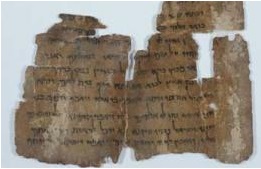
Qumran – Dead Sea Scrolls – Genesis
Redemption promised (Gen. 3:15).
Satan is alive & well on planet Earth (Gen. 3).
Theology Matters (GIII is foundational).
Ussher, Y6K, YES, Annals of the World.
Virgin Birth (Gen. 3:15).
Week, origin of (Creation Week, Seven).
X-cellent, Adam was smart
YES = Young Earth Science (Gen. 5&11).
ZZZ è Adams Lost Dream.
In The Great Evangelical Disaster, Francis Schaeffer said,

The issue is whether the Bible gives propositional truth … where it touches history and the cosmos and this all the way back to pre-Abrahamic history, all the way back to the first eleven chapters of Genesis … [2]

Every single biblical doctrine of theology, directly or indirectly, ultimately has its basis in the Book of Genesis” – Ken Ham. [3]

Writing in “The Funeral of a Great Myth” C.S. Lewis wrote,

… everything is moving “upwards and onwards.”  Reason has “evolved” out of instinct … civilization out of savagery … [many Darwinists claim] reason, virtue, art and civilization as we now know them are only crude or embryonic beginnings of far better things – perhaps Deity itself – in the remote future. [4]
 

Notes:
1)  A is for Adam by Ken & Mally Ham (Master Books, 1995), p. 78.
2)  The Complete Works of Francis A. Schaeffer, Vol. 4 (Crossway, 1996), p. 332, emphasis added.
3)  The Lie by Ken Ham (Master Books, 25th Anniv. ed., 2012), p. 82, emphasis in original. 
4)  Christian Reflections by C.S. Lewis (Eerdmans, 1967), p. 86.

Sunday, June 20, 2010

The Meaning of Fossils

Knowing this first of all, that scoffers will come in the last days with scoffing, following their own sinful desires. They will say, Where is the promise of his coming? For ever since the fathers fell asleep, all things are continuing as they were from the beginning of creation. For they deliberately overlook this fact, that the heavens existed long ago, and the earth was formed out of water and through water by the word of God, and that by means of these the world that then existed was deluged with water and perished. But by the same word the heavens and earth that now exist are stored up for fire, being kept until the day of judgment and destruction of the ungodly (2 Peter 3:3-7, ESV)

Would anyone have doubted the reality of the Flood fifty years after it happened? How about 500 years after the Flood? In Post-Babel times certain people groups lost the memory of the Global Flood, yet the rocks cry out and point to the Deluge. Neanderthals put fossils in their graves; could this be because they knew they were relics from the Deluge? [1]
Martin Rudwick wrote The Meaning of Fossils: Episodes in the History of Palaeontology which discusses the history of how fossils came to be understood as once living things. He also explains how fossils were interpreted to represent extinction and evolution.

Xanthos of Sardis (c. 500 BC) understood that fossils were the remains of once living organisms. [2] Xenophanes (d. ca. 490 BC) discovered fossil fishes and shells and thought that the land was underwater in the past. Herodotus (d. 425 BC), the historian, concluded that Egypt was once underwater because of the fossil shells there.
Lucretius (d. 45 BC), Roman poet and Epicurean, held the Young Earth view:

Why have no poets sung of feats before the Theban War and the tragedy of Troy[1200 BC?]. The answer, I believe, is that the world is newly made: its origin is a recent event, not one of remote antiquity. That is why even now some arts are being perfected… [3]
Human history only goes back a few thousand years, so the earth is young. If the earth was made recently, then the fossils must be due to the Global Flood.

Leonardo da Vinci (d. 1519) knew that fossils were once living things, but suffered under the misapprehension that the Flood would have left a blended deposit rather than multiple layers. He held that fossils on the tops of mountains were deposited before the mountains were raised which is perfectly consistent with the Flood.

Tertullian pointed to fossils found on mountains as evidence of the Flood. Augustine saw fossils as the remains of creatures living before the Flood. Martin Luther referred to fossils as being the result of the Deluge in his commentary on Genesis. Agostino Scilla published a work in 1670 on fossils which he illustrated himself which pointed to the Flood as their cause. [4]

Colin Stearn and Robert Carroll, authors of a mainstream paleontology text, freely admit that by the middle of the eighteenth century, “Most [naturalists] attributed them [the fossils] to animals destroyed in the Biblical flood…” [5]

Polystrate fossils, such as a trees passing through multiple strata, clearly indicate rapid deposition. One famous example Terry Mortenson highlights in his book The Great Turning Point (p. 205):
This tree discovered in 1826 is from a quarry in Craigleith, Scotland and is about 80 feet long and goes through about ten or twelve different strata (the angle is about 40 degrees). [6]

Even Darwin himself toyed with catastrophism:
What, then, has exterminated so many species and whole genera? The mind at first is irresistibly hurried into the belief of some great catastrophe; but thus to destroy animals, both large and small, in Southern Patagonia, in Brazil, on the Cordillera of Peru, in North America up to Behring's Straits, we must shake the entire framework of the globe. [7]

Terry Mortenson notes the sad paradigm shift away from Flood Geology:

Catastrophism did not die out immediately, although by the late 1830s few old-earth catastrophists in the United Kingdom, America, or Europe believed in a geologically significant Noachian deluge. [8]

Amazingly, as late as 1892 a Yale professor (Military Science) defended the Deluge. Charles Totten wrote The Flood: the Fact of History defending the feasibility of the Ark. [5]

In addition to the geological indicators of the Flood, there are hundreds of Flood traditions from all around the world.

Notes:
1) Paleontology: The Record of Life by Colin Stearn and Robert Carroll (John Wiley & Sons, New York, NY, 1989), p. 5.
2) Ibid.
3) “Time and Ancient Records” by David Watson, Creation Research Society Quarterly, Vol. 18, No. 1, June 1981, p. 34, emphasis added.
4) The Deluge Story in Stone by Byron Nelson (Bethany Fellowship, Minneapolis, MN, 1968), pp. 9, 10, 18.
5) Stearn and Carroll, p. 6.
6) Nelson, p. 111.
7) The Voyage of the Beagle By Charles Darwin, p. 110 (emphasis added).
8) The Great Turning Point by Terry Mortenson (Master Books, Green Forest, AR 2004), p. 33.
9) Nelson, pp. 154-156.