Showing posts with label kinds. Show all posts

Saturday, March 2, 2013

The ABC’s of Genesis 1 to 11

Adam was a real historical figure.
Babel confused everybody.
Creator and Sustainer, God is.
Deluge – the Global Flood ruined Earth.
Eve (aka Eva) is the Mother of All (Gen. 3:20).
Fall – the Curse was the consequence.
Genesis 1-11 è foundational to Biblical doctrine.
Historical Narrative – Gen. 1:1 to 2:3 is.
Ice AgeONE, not many.
Jesus endorsed Genesis 1-11.
Kinds are fixed (not species).
Lamb – sacrifice is required (Gen. 3:21, Ex. 12). [1]
Man is unique (Gen. 1:26, 2 Peter 2:12, 16).
Noah, Ark, Global Flood (Gen. 6-9).
Offerings and worship (Heb. 11:4, Gen. 8:20).
Pain since the Fall (Gen. 3:16-19).
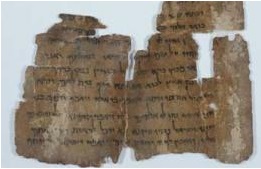
Qumran – Dead Sea Scrolls – Genesis
Redemption promised (Gen. 3:15).
Satan is alive & well on planet Earth (Gen. 3).
Theology Matters (GIII is foundational).
Ussher, Y6K, YES, Annals of the World.
Virgin Birth (Gen. 3:15).
Week, origin of (Creation Week, Seven).
X-cellent, Adam was smart
YES = Young Earth Science (Gen. 5&11).
ZZZ è Adams Lost Dream.
In The Great Evangelical Disaster, Francis Schaeffer said,

The issue is whether the Bible gives propositional truth … where it touches history and the cosmos and this all the way back to pre-Abrahamic history, all the way back to the first eleven chapters of Genesis … [2]

Every single biblical doctrine of theology, directly or indirectly, ultimately has its basis in the Book of Genesis” – Ken Ham. [3]

Writing in “The Funeral of a Great Myth” C.S. Lewis wrote,

… everything is moving “upwards and onwards.”  Reason has “evolved” out of instinct … civilization out of savagery … [many Darwinists claim] reason, virtue, art and civilization as we now know them are only crude or embryonic beginnings of far better things – perhaps Deity itself – in the remote future. [4]
 

Notes:
1)  A is for Adam by Ken & Mally Ham (Master Books, 1995), p. 78.
2)  The Complete Works of Francis A. Schaeffer, Vol. 4 (Crossway, 1996), p. 332, emphasis added.
3)  The Lie by Ken Ham (Master Books, 25th Anniv. ed., 2012), p. 82, emphasis in original. 
4)  Christian Reflections by C.S. Lewis (Eerdmans, 1967), p. 86.

Friday, August 3, 2012

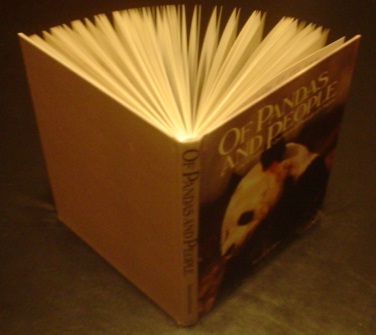
Of Pandas and People

In the famous Dover, PA Intelligent Design (ID) case, Of Pandas and People (OPAP) by Percival Davis and Dean Kenyon was at the center of attention.  It was recommended as a reference text for high schools.  It is an excellent book and suitable for homeschoolers and those who want a less technical presentation.  OPAP is the primary text covering the whole of ID.  Dembski and Wells have written something similar.  An episode of NOVA covered the Dover controversy.
Many hold that ID supporters oppose Young Earth Science (YES).  Creationist paleontologist Marcus Ross was at one time a Fellow with the Discovery Institute. [1]  Is this consistent with Jill Schneiderman’s (Prof. of Earth Science, Vassar) claim that, “the bulk of intelligent design creationists are old-Earth [support Old Earth Fallacies = OEF]…”? [2]  Does “bulk” mean 70%, 80% ?  Geologist Timothy Heaton holds that, “Most ID authors accept the antiquity of the Earth …” [3]  This would appear to mean at least 51% of ID advocates are anti-YES.

The co-author of OPAP, Dean Kenyon, accepts YES.  The “Critical Reviewers” of OPAP include such pro-YES scholars as John Baumgardner and Kurt Wise.  Nancy Pearcey holds to fixity of kinds (see how this connects with YES below) and is one of OPAP’s “Editors and Contributors.” [4] 
OPAP seems to favor fixity of kinds: 

“… speciation represents only limited change. … Speciation is a means of creating diversity within types of living things …” [5]

“Many scientists conclude that there never was a progression from one cluster [of organisms] to another – that each really did originate independently.  This idea accords with the theory of intelligent design.  Design theories suggest that various forms of life began with their distinct features already intact:  fish with fins and scales, birds with feathers and wings …” [6]
Man is an intelligent designer and makes kinds of things: chairs, tables, portraits, clocks, doors, ovens et cetera.  People don’t take a clock and “evolve” it into a toaster!  By the laws of thermodynamics, one creation is implied, so all kinds of life began at the beginning.  Given this assumption, the only interpretation of the rock record that appears likely is a Global Catastrophe.  Fixity of Kinds è Global Flood è YES.  OPAP points out that fossilization requires rapid burial. [7] 

Davis and Kenyon reveal that, “Some [design proponents] take the view that the earth’s history can be compressed into a framework of thousands of years …” [8]

Stephen Meyer (Signature in the Cell) co-wrote the “Afterword” for OPAP, but fails to realize the movement of ID towards YES, despite his B.S. in Geology:

“… design implies absolutely nothing about beliefs normally associated with Christian fundamentalism, such as a young earth, a global flood, or even the existence of the Christian God.” [9]

Quite the contrary, philosopher Mortimer Adler (d. 2001) opposed evolution and concluded that the Intelligent Designer must be the personal Creator who made the cosmos.  He also shows that it is reasonable that one of the major world religions is true (Judaism, Christianity or Islam).  Based on Adler’s tests (world evangelism, salvation, immanence v. transcendence and mystery), clearly Christianity wins. [10]  Adler himself became a committed believer at the age of 82 in 1984. 

Listen to this erudite insight from philosopher, mathematician and Global Flood supporter, William Dembski:  “It is no longer credible to conflate informed criticism of Darwinism [or OEF] with ignorance, stupidity, insanity, wickedness, or brainwashing.” [11]
The back cover of OPAP is blank – what does that tell you?  For a hint, read here and here.  Feedback welcome ±   Contact info is in my profile (top right).  The choice is yours – intelligent purpose or pandemonium.

Notes:
1) For the Rock Record ed. by Jill Schneiderman and Warren Allmon (Univ. of Calif. Press, Berkeley, CA, 2009), p. 86.
2) Ibid., p. 12.
3) Ibid., p. 31.
4) Of Pandas and People by Percival Davis and Dean Kenyon (Haughton Pub., Dallas, TX, 1993, 2nd ed.), p. iii.
5) Davis and Kenyon, p. 19.
6) Ibid., p. 25.
7) Ibid., p. 21.
8) Ibid., p. 92.
9) Ibid., p. 161.
10) Truth in Religion:  The Plurality of Religions and the Unity of Truth by Mortimer Adler (Macmillan Pub., NYC, NY, 1990), pp. 101-110.
11) “The Myths of Darwinism” by William Dembski in Uncommon Dissent ed. by William Dembski (ISI Books, Wilmington, DE, 2004), p. xxxvii.

Saturday, October 23, 2010

NOAH, Kinds & Preaching


Noah was warned about the Flood when he was 480 years old (Ge 6:3, 7:11). The Flood came 120 years later. What was Noah doing during this time? Noah’s father Lamech prophesied that Noah would bring relief to the earth (Ge 5:28, 29), so the people at that time should have been open to Noah’s message.

Noah’s sons were not born until twenty years after he was told about the flood (Ge 5:32). How did he start building the Large Barge (Ark)? Cornelius Van Til held that he hired carpenters. After Job’s ordeal he was very very blessed:
Could it be that Noah was also wealthy? He could thus afford dozens or hundreds of carpenters.

Noah was a preacher of righteousness (2 Peter 2:5). Albert Barnes held that Noah, “…warned the world of the judgment that was preparing for it.” [2] According to A.T. Robertson, “… Noah preached to the men of his time during the long years.” [3] This view may also aid us in the interpretation of 1 Peter 3:19, 20. The same word in 2 Peter 2:5, “herald” or “preacher,” is also used in 1 Tim. 2:7 and 2 Tim. 1:11:
But what did Paul do? He went around the world preaching Christ – maybe Noah did likewise. Noah preached on the righteousness that comes by faith (Heb 11:7). Noah could easily travel the globe in 120 years.
Could it be that some repented and believed in the coming Savior (Ge 3:15) and died before the Flood started, such as Methuselah (Ge 5:26-28)?

Many object to the global flood because the ark could not hold all the species. [1] But this shows a serious confusion of kinds versus species. How many kinds are there? First, let’s look at the minimum number of kinds (17):
What about the maximum number of kinds? John Woodmorappe estimates the number of animals on the Ark as around 16K. [4] Thus there may be around 8K kinds. Suppose Woodmorappe is off by a factor of two, then we might give a provisional guess at the maximum number of air-breathing, land-based kinds at 16K. If there were many more kinds than that, the Ark would have been too crowded.

For more on biblical kinds, check out Variation and Fixity in Nature by Frank Marsh and The Natural Limits to Biological Change by Lane Lester and Ray Bohlin.
The work of the Baraminology Study Group and Art Battson is also helpful. Clearly, sponges, clams, starfish and lobsters are different kinds.

“Noah found grace in the eyes of the Lord” – Ge 6:8

How would Noah evaluate the ID movement and their reticence to name the Intelligent Designer?

Notes:1) William Smith, Smith’s Bible Dictionary (Fleming H. Revell, Tappan, NJ, 1977 ed. [orig. pub. 1884]), p. 457, “Noah” entry.
2) Albert Barnes, Barnes New Testament Notes (Online Bible), 2 Pet. 2:5.
3) A.T. Robertson, Robertson’s New Testament Word Pictures (Online Bible), 2 Pet. 2:5.
4) John Wodmorappe, Noah’s Ark: A Feasibility Study (ICR, Santee, CA, 1996), pp. 10-13.